

History of the Vikings
On the following pages you find brief facts on the history of the vikings as well as an historc overview in chronological order.
Inhalt:
The name "Viking"
It is not clear where the name "Viking" comes from and the mystery is discussed until today. Possibly the notation derives from the the old norse verb "víkingr", which means something like "Stealing" or "looting". Other historians see the origin of the name in the Latin word "vicus", which meant traveling men on ships moving quickly from one place to the next.
The Vikings in Europe
The age of the Vikings started from the point of view of some historians with the attack of Nordic seafarers on the Abbey of Lindisfarne in Northumberland in England on 8th June 793 AD. In the years before heathen sailors already raided in the British Isles and Ireland. With unbridled savagery further men sallied out from the northern European ports by the end of the eighth century. They established an age of discovery, trade and colonization.
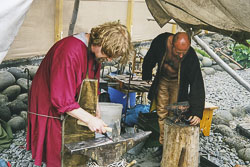
Though the Northmen still have the reputation of beeing as cruel warriors, but many scientists believe today that they have rather enriched than damaged the established European civilizations during the Middle Ages. The Vikings were not only violent warriors, but also farmers, craftsmen, politicians, merchants and aesthetes, who shaped and built stately ships. But also poets and artists were found among them. In Iceland for example, heroes and gods stories and poems survived by word of mouth until they have been recorded in written form about 100 years after the end of the Viking era. The Icelandic sagas and the Edda is now world famous. And also the cities of Dublin and Reykjavik would probably not exist today if the vikings had not founded them more than 1,000 years ago.
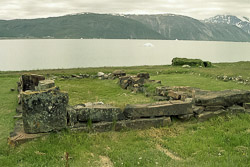
Most Scandinavians of the Viking Age came from Norway or Denmark. Their raids have led them to the British Isles, Ireland and the Franks. The Normandy in northern France got its name from the "North men". Similarly, the name "Normans" derives from the men from the North. The Western Vikings reached in their movements the Iberian Peninsula and even North Africa. Other people moved north to the Orkney Islands, the Shetland Islands and the Faroe Islands. In the 9th century, they settled in Iceland and on their expeditions they reached Greenland and even North America.
Vikings from the eastern Sweden, however, sailed in the direction of Eastern Europe and even explored the rivers and the vastness of Russia. The Swedish Vikings, who setteled in Eastern Europe since the year 750, were often called "Waräger" or "Rus" by the Finns and Slavs. So they gave the name to what is now Russia and Belarus. Even the Byzantine Empire was affected by the raids of the Vikings, when they attacked Constantinople in the year 860.
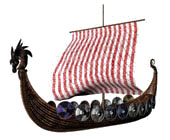
A particular strength of the Vikings was naval architecture. The famous dragon boats were lighter, leaner, faster and were more maneuverable than the heavy sailing ships of other Europeans. In Scandinavia, people lived near the coast and were also able to navigate on inland waters and rivers. Their skill in sailing and navigation as well as their good geographical knowledge gave them great military benefits during battles.
The Viking Age ended with the 11th century. Historians believe that the main reasons are the following:
- End of superiority in shipbuilding
- Norway, Denmark and Sweden became major kingdoms
- missionary of the Scandinavians
- political changes in Europe